Exploring Different Types of Drill Rigs
- Philix Chen

- Oct 20, 2025
- 4 min read
Drill rigs are essential tools in many fields, including geology, environmental science, civil engineering, research, and prospecting. They enable professionals to extract core samples, explore underground formations, and conduct precise investigations. Understanding the various drill rig types helps in selecting the right equipment for specific tasks and environments. In this article, I will walk you through the main categories of drill rigs, their features, and their applications.
Overview of Different Drill Rig Types
Drill rigs come in many forms, each designed for particular drilling needs and site conditions. The choice depends on factors such as the depth of drilling, the type of material to be penetrated, mobility requirements, and the precision needed for sampling.
Here are some common categories of drill rigs:
Rotary Drill Rigs: These rigs use a rotating drill bit to cut through rock or soil. They are versatile and widely used in mining, construction, and oil exploration.
Percussion Drill Rigs: These rigs operate by repeatedly striking the ground with a heavy drill bit. They are effective in hard rock formations.
Auger Drill Rigs: Auger rigs use a helical screw blade to remove soil or soft rock. They are common in environmental sampling and shallow drilling.
Diamond Core Drill Rigs: These rigs use diamond-tipped bits to extract cylindrical core samples. They provide high precision and are favored in mineral exploration.
Portable Backpack Drill Rigs: Compact and lightweight, these rigs are designed for remote or confined spaces where larger rigs cannot operate.
Each type has its strengths and limitations. For example, rotary rigs are powerful but bulky, while backpack rigs offer mobility but limited depth capacity.

Detailed Look at Different Drill Rig Types
Rotary Drill Rigs
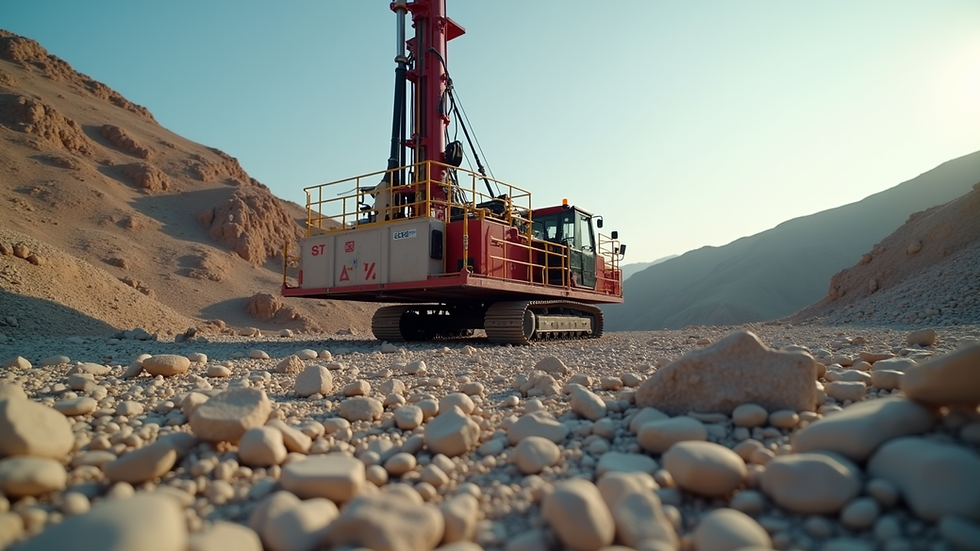
Rotary drill rigs are among the most common and versatile. They work by rotating a drill bit that grinds or cuts through the subsurface. These rigs can be mounted on trucks, tracks, or stationary platforms. They are suitable for deep drilling and can handle a variety of ground conditions.
Applications:
Oil and gas exploration
Mining operations
Large-scale construction projects
Advantages:
Can drill to great depths
Adaptable to different bit types
Efficient in soft to medium-hard rock
Limitations:
Large and heavy, requiring significant transport and setup
Less effective in very hard rock without specialized bits
Percussion Drill Rigs
Percussion rigs use a hammering action to break rock. The drill bit repeatedly strikes the surface, fracturing the material. This method is effective in hard rock where rotary drilling may be slow or ineffective.
Applications:
Hard rock mining
Quarrying
Foundation drilling in rocky soils
Advantages:
Effective in very hard rock
Simple mechanical design
Can be used in remote locations with minimal infrastructure
Limitations:
Slower drilling speed compared to rotary rigs
Generates more vibration and noise
Auger Drill Rigs
Auger rigs use a screw-like bit to remove soil or soft rock. They are ideal for shallow drilling and environmental sampling. Augers come in various sizes and can be manually operated or mounted on vehicles.
Applications:
Environmental site assessments
Soil sampling
Shallow foundation investigations
Advantages:
Lightweight and portable
Quick setup and operation
Minimal disturbance to the site
Limitations:
Limited to soft ground conditions
Not suitable for deep or hard rock drilling

Diamond Core Drill Rigs
Diamond core rigs use diamond-embedded drill bits to cut precise cylindrical cores from rock formations. These cores provide valuable geological information and are essential in mineral exploration.
Applications:
Mineral and ore exploration
Geological research
Environmental monitoring
Advantages:
High precision core samples
Can drill through very hard rock
Minimal sample contamination
Limitations:
Higher cost due to diamond bits
Requires skilled operation and maintenance
Portable Backpack Drill Rigs
Portable backpack drill rigs are designed for mobility and ease of use in challenging environments. They are compact, lightweight, and can be carried by a single person. These rigs are ideal for remote locations, confined spaces, or areas with limited access.
Applications:
Remote geological surveys
Environmental sampling in difficult terrain
Archaeological investigations
Advantages:
Highly portable and easy to transport
Quick setup and operation
Suitable for precise core sampling in tight spaces
Limitations:
Limited drilling depth and diameter
Less power compared to larger rigs

What is the Most Common Type of Rig?
Among the various drill rigs, rotary drill rigs are the most commonly used across industries. Their versatility and ability to handle a wide range of drilling conditions make them the go-to choice for many projects. Whether mounted on trucks or tracks, rotary rigs can drill deep and adapt to different bit types, making them suitable for oil, gas, mining, and construction.
However, the choice of rig always depends on the specific project requirements. For example, in environmental sampling or remote exploration, portable backpack drill rigs may be more practical despite their limited depth capacity.
Selecting the Right Drill Rig for Your Project
Choosing the appropriate drill rig involves evaluating several factors:
Drilling Depth: Determine how deep you need to drill. Rotary rigs are best for deep drilling, while auger and backpack rigs suit shallow depths.
Ground Conditions: Assess the hardness and type of material. Percussion rigs excel in hard rock, while augers work well in soft soils.
Mobility Needs: Consider site accessibility. Portable rigs are ideal for remote or confined areas.
Sample Precision: For detailed geological analysis, diamond core rigs provide the highest quality samples.
Budget and Resources: Larger rigs require more investment and infrastructure, while smaller rigs are cost-effective for limited scope projects.
By carefully matching these factors to your project goals, you can optimize efficiency and data quality.
Enhancing Exploration with Advanced Drill Rigs
Technological advancements continue to improve drill rig capabilities. Modern rigs feature automated controls, improved safety systems, and enhanced power efficiency. Portable backpack drill rigs, in particular, have benefited from innovations that increase their drilling depth and sample quality without sacrificing mobility.
For professionals working in challenging environments, these advancements make it easier to conduct precise core sampling and gather reliable data. Hans, a leading provider of portable exploration backpack drill rigs, focuses on delivering equipment that supports critical research and resource exploration worldwide.
If you want to learn more about the various types of drill rigs and find the best fit for your needs, reaching out to specialized suppliers can provide tailored advice and solutions.
Exploring the different drill rig types equips you with the knowledge to select the right tool for your project. Whether you need deep drilling power, precision core samples, or mobility in remote locations, understanding these rigs' capabilities ensures successful and efficient operations.


Comments