Discover the Different Types of Drill Rigs
- Philix Chen

- Mar 2
- 4 min read
Drilling is a fundamental process in many fields such as geology, environmental science, civil engineering, and resource exploration. The right drill rig can make a significant difference in the efficiency and accuracy of your work. In this post, I will guide you through the different types of drill rigs, explaining their features, applications, and how to choose the best one for your needs. This knowledge will help you make informed decisions when selecting equipment for core sampling, soil testing, or mineral exploration.
Understanding Different Types of Drill Rigs
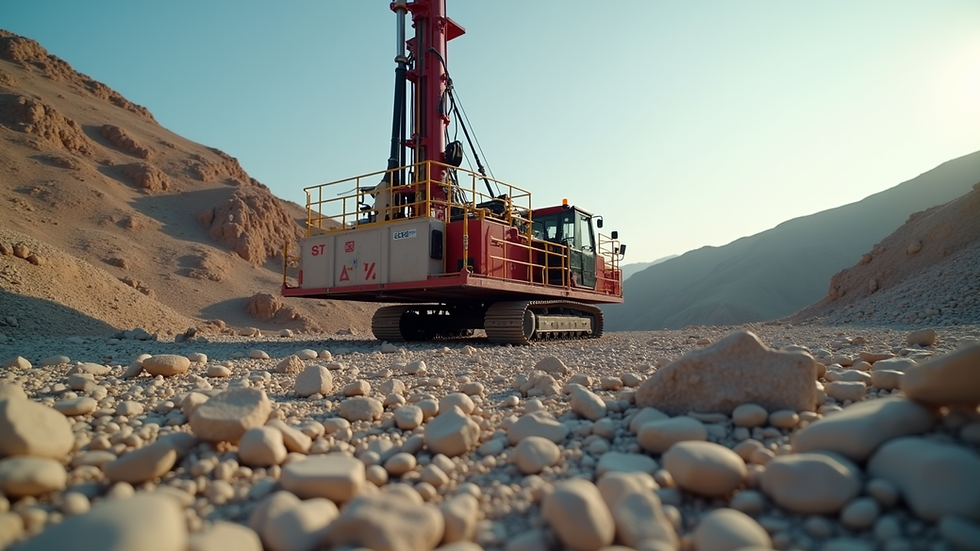
Drill rigs come in various designs and sizes, each tailored to specific drilling tasks and environments. From large, truck-mounted rigs used in mining to compact, portable units for remote locations, the diversity is vast. Here, I will break down the main categories of drill rigs and their typical uses.
1. Rotary Drill Rigs
Rotary drill rigs are among the most common types used in exploration and construction. They operate by rotating a drill bit to cut through rock or soil. These rigs are versatile and can handle a wide range of ground conditions.
Applications: Mineral exploration, water well drilling, and foundation work.
Advantages: High drilling speed, ability to drill deep holes, and adaptability to different soil types.
Limitations: Larger rigs can be heavy and less mobile.
2. Percussion Drill Rigs
Percussion rigs use a hammering action to break rock and soil. The drill bit repeatedly strikes the surface, making it effective for hard rock formations.
Applications: Hard rock drilling, quarrying, and geotechnical investigations.
Advantages: Effective in tough ground conditions, simple mechanism.
Limitations: Slower than rotary rigs, more vibration and noise.
3. Auger Drill Rigs
Auger rigs use a helical screw blade to remove soil or soft rock. They are ideal for shallow drilling and soil sampling.
Applications: Environmental sampling, geotechnical surveys, and shallow foundation drilling.
Advantages: Lightweight, easy to operate, minimal disturbance to the site.
Limitations: Not suitable for hard rock or deep drilling.
4. Diamond Core Drill Rigs
Diamond core rigs use a diamond-embedded drill bit to extract cylindrical core samples. These samples provide detailed information about subsurface geology.
Applications: Mineral exploration, geological research, and environmental studies.
Advantages: High precision, ability to retrieve intact core samples.
Limitations: Slower drilling speed, higher cost.
5. Sonic Drill Rigs
Sonic rigs use high-frequency vibrations combined with rotation to penetrate soil and rock. This technology allows for fast and clean drilling.
Applications: Environmental sampling, geotechnical investigations, and groundwater monitoring.
Advantages: Minimal sample disturbance, fast penetration rates.
Limitations: Limited to certain soil types, higher initial investment.

Key Features to Consider When Choosing a Drill Rig
Selecting the right drill rig depends on several factors. Here are some critical features to evaluate:
Portability: For remote or rugged locations, lightweight and compact rigs are preferable.
Drilling Depth: Consider the maximum depth required for your project.
Ground Conditions: Match the rig type to the soil or rock hardness.
Power Source: Options include diesel, electric, or hydraulic power.
Sample Quality: For geological research, preserving core integrity is essential.
Ease of Use: User-friendly controls and maintenance reduce downtime.
By assessing these features, you can narrow down your options and select a rig that meets your operational needs efficiently.
What are the 7 drilling machine operations?
Understanding the basic operations of drilling machines helps in optimizing their use. Here are the seven primary drilling operations:
Spot Drilling: Creating a small indentation to guide the main drill bit.
Drilling: The process of creating a hole using a rotating drill bit.
Reaming: Enlarging an existing hole to a precise diameter.
Boring: Enlarging a hole with a single-point cutting tool.
Tapping: Cutting internal threads inside a hole.
Counterboring: Enlarging the top part of a hole to allow a bolt head to sit flush.
Countersinking: Creating a conical hole to allow a screw head to sit flush.
Each operation serves a specific purpose and requires appropriate tooling and machine settings.

Practical Recommendations for Field Drilling
When working in the field, especially in remote or challenging environments, consider these practical tips:
Choose Portable Rigs: Lightweight rigs reduce transport challenges and setup time.
Prepare for Maintenance: Carry essential tools and spare parts to handle common issues.
Plan for Power Supply: Ensure access to reliable power sources or use rigs with flexible power options.
Train Operators: Skilled operators improve drilling accuracy and equipment longevity.
Monitor Environmental Impact: Use rigs and techniques that minimize site disturbance.
These steps help maintain productivity and ensure reliable data collection during drilling operations.
Enhancing Exploration with Portable Drill Rigs
Portable exploration backpack drill rigs represent a significant advancement in drilling technology. They combine lightweight design with high performance, enabling professionals to conduct accurate core sampling in confined or rugged areas.
Advantages: Easy to carry, quick to deploy, and suitable for inaccessible locations.
Use Cases: Environmental studies, geological surveys, and mineral prospecting in remote regions.
Impact: These rigs empower researchers to gather high-quality data without the logistical challenges of traditional heavy equipment.
By integrating portable rigs into your toolkit, you can expand your operational reach and improve the quality of your exploration projects.
Final Thoughts on Selecting Drill Rigs
Choosing the right drill rig is a critical step in any drilling project. Understanding the capabilities and limitations of each type helps you match equipment to your specific needs. Whether you require deep rotary drilling, precise core sampling, or lightweight portability, there is a rig designed to meet those demands.
For more detailed information on types of drill rigs, I recommend exploring specialized resources and consulting with equipment providers who focus on your field of work.
By investing time in selecting the appropriate drill rig, you ensure efficient operations, accurate data collection, and successful project outcomes.


Comments